Selecting the right vendor through a Request for Proposal (RFP) process is one of the most critical responsibilities for any procurement team. This guide breaks down the complete RFP vendor selection process from creating effective evaluation criteria to scoring vendor proposals, so that organizations can make informed, confident decisions. Whether you are managing complex procurement projects or simply looking to streamline your vendor evaluation, this guide offers actionable insights, real-world best practices, and a framework for success.
What Is an RFP Vendor and Why It Matters
An RFP vendor is a supplier or service provider that responds to your organization’s Request for Proposal; a document outlining your project requirements, deliverables, and evaluation criteria.
Choosing the right vendor is not just about who offers the lowest bid. It is about identifying a partner who can meet technical requirements, align with your company’s culture, deliver consistently, and provide value long after the contract is signed.
A well-structured vendor selection process ensures better cost control, reduced risks, and measurable performance outcomes across procurement projects.
How Does the RFP Vendor Selection Process Work?
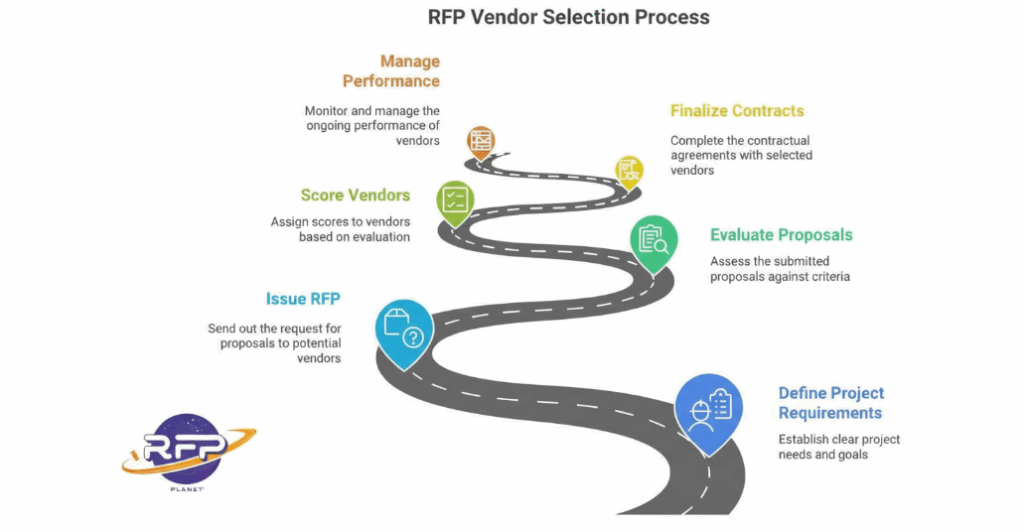
The vendor selection process follows a structured approach that helps procurement teams maintain transparency, consistency, and fairness. The steps typically include:
- Defining project requirements – Clarify your goals, scope, and technical specifications.
- Issuing the RFP – Invite vendors to submit detailed proposals.
- Evaluating vendor proposals – Score proposals against predefined evaluation criteria.
- Conducting vendor interviews or presentations – Assess cultural fit and capability.
- Negotiating terms and finalizing the contract – Ensure alignment on scope, pricing, and SLAs.
A structured process minimizes bias and enables stakeholders to make informed decisions supported by data-driven scoring systems.
What Should Be Included in a Strong RFP?
A strong RFP is the cornerstone of an effective procurement strategy. It must communicate exactly what your organization expects from potential vendors. The document should clearly describe the project’s objectives, scope of work, and deliverables while also detailing the technical, operational, and compliance requirements. Including a clear project timeline and submission guidelines helps vendors plan their proposals effectively and ensures all submissions are comparable.
In addition to outlining evaluation criteria, a good RFP defines the scoring mechanism and contract expectations upfront. Transparency at this stage eliminates misunderstandings later and encourages vendors to submit realistic and responsive proposals. A well-written RFP not only attracts qualified bidders but also discourages those who cannot meet your standards that save valuable time during evaluation.
How to Define Evaluation Criteria That Actually Work
Evaluation criteria form the backbone of every vendor selection process. They guide how proposals are assessed and ensure that decisions are based on measurable, consistent parameters rather than intuition. The most effective evaluation frameworks blend both qualitative and quantitative measures.
Organizations often assess vendors on technical expertise, project experience, financial stability, service quality, innovation potential, and overall cost-effectiveness. The best practice is to assign weighted scores to each criterion based on its importance to the project. For instance, technical capability might carry more weight than pricing if the project involves specialized work, while customer support might take precedence in service-based contracts like call center operations.
Using predefined evaluation criteria makes it easier for teams to compare vendors objectively and helps prevent bias. Ultimately, this structured approach ensures that the selected vendor is not just the lowest bidder but the one most capable of delivering sustainable results.
How to Score and Evaluate Vendor Proposals Objectively
Scoring is where the quantitative aspect of the evaluation comes in. Using a weighted scoring model allows teams to compare vendors objectively across multiple factors.
Here is how to score vendor proposals effectively:
- Assign scores (e.g., 1–10) for each criterion.
- Apply weightings to reflect importance.
- Calculate total scores to identify top performers.
- Conduct a calibration meeting to ensure evaluator alignment.
The goal is not just to rank vendors, but to identify the right partner who meets your technical and strategic needs.
What Are the Best Practices for Vendor Evaluation?
Top performing procurement teams follow best practices to make the evaluation process transparent, fair, and efficient:
- Involve the right stakeholders early to ensure technical, legal, and operational needs are represented.
- Document every evaluation step for audit and compliance purposes.
- Use standardized templates for scoring and proposal comparison.
- Schedule vendor presentations to assess communication skills and cultural fit.
- Avoid bias by using group evaluation and independent scoring.
When teams use consistent vendor evaluation criteria and a structured scoring approach, they can defend their decisions with clarity and confidence.
How Do You Choose the Right Vendor?
Choosing the right vendor means looking beyond price tags. While cost is always a major factor, the lowest bid can often lead to hidden costs, poor quality, or missed deadlines. Instead, organizations should adopt a value-for-money approach that considers both short-term costs and long-term benefits.
A right fit vendor demonstrates a clear understanding of your project requirements from large-scale human resources projects to specific technical builds that offer transparent pricing structures, and provides flexibility in adapting to change. Assessing value also means evaluating the vendor’s post-contract support, responsiveness, and ability to scale services as your needs evolve. In short, selecting the right vendor is about partnership, not just procurement but it is about choosing a collaborator who will grow with your business.
How Can Technology Simplify the Vendor Selection Process?
Modern procurement teams increasingly rely on RFP automation tools and web-based software systems to streamline repetitive tasks such as proposal collection, scoring, and reporting.
Automation helps you:
- Reduce manual scoring errors.
- Standardize evaluation templates.
- Track proposal timelines and status updates.
- Improve stakeholder collaboration.
- Maintain an audit trail for compliance.
An automated RFP management system saves time, improves accuracy, and ensures consistency across procurement projects.
What Common Mistakes Should You Avoid in Vendor Selection?
Even experienced teams can make avoidable errors during the rfp vendor selection process. One of the most common mistakes is issuing vague RFPs with unclear evaluation criteria, leading to poor quality vendor responses.
Overemphasizing cost is another pitfall, as it often results in selecting vendors who cannot maintain long-term performance or compliance.
Other frequent issues include inadequate due diligence, overlooking vendor references, or excluding key stakeholders from the process. Finally, failing to plan for post-selection management such as setting measurable KPIs or review cycles can undermine even the best selection process. Avoiding these mistakes ensures a smoother, more accountable procurement cycle and helps maintain vendor relationships built on trust and performance.
How to Finalize the Contract and Make the Final Decision
After evaluation, shortlisting, and presentations, it’s time to make the final selection and negotiate terms.
Key steps:
- Reconfirm pricing and scope based on final offers.
- Define service-level agreements (SLAs) to measure performance.
- Include risk management and exit clauses in the contract.
- Set up governance structure for ongoing vendor management.
The final decision should balance both the quantitative score and qualitative insights from stakeholder discussions.
How to Manage and Monitor Vendor Performance Post-Selection
Vendor management begins after the contract is signed, not before. Continuous monitoring ensures that vendors meet agreed-upon performance levels and comply with service-level agreements.
Procurement teams should establish key performance indicators (KPIs) to track metrics such as delivery timelines, cost control, quality standards, and customer satisfaction.
Regular performance reviews and feedback sessions foster transparency and continuous improvement. By maintaining open communication, procurement teams can address issues early and ensure mutual accountability. Long-term success in vendor relationships depends on proactive engagement, data-based evaluations, and a culture of collaboration.
FAQ’s about RFP Vendor Selection
What is the main goal of an RFP?
The main goal of an RFP is to identify the vendor that best meets your organization’s technical, financial, and operational needs. It creates a structured way to compare proposals and select the most suitable partner through transparent evaluation criteria.
How do I know if my RFP is detailed enough?
A strong RFP clearly defines the project scope, requirements, evaluation method, and timeline. If vendors can fully understand your goals and submit tailored proposals without excessive clarification requests, your RFP is likely well-structured.
What’s the difference between an RFP and RFQ?
An RFP (Request for Proposal) evaluates both technical and qualitative aspects of a vendor’s offer, while an RFQ (Request for Quotation) focuses mainly on price. RFPs are best used when quality, expertise, and innovation matter as much as cost.
How do I create a fair scoring system for vendor proposals?
Use a weighted scoring system where each criterion (e.g., cost, quality, experience) has a defined percentage of the total score. This makes scoring objectives and helps align decisions with your project priorities.
Can automation really improve vendor selection?
Yes. RFP automation software eliminates repetitive tasks, reduces scoring bias, and ensures that all proposals are evaluated consistently. It saves time, enhances collaboration, and provides data-driven insights for decision-making.
What are the most common mistakes to avoid during RFP evaluation?
Avoid vague requirements, focusing only on price, skipping stakeholder involvement, and ignoring vendor performance history. Document everything and maintain transparency to ensure a defensible, high-quality selection.
Summary: Key Takeaways for Choosing the Perfect RFP Vendor
The process of choosing the perfect RFP vendor is as much about strategy as it is about structure. A well planned vendor selection process aligns organizational needs with vendor capabilities through a transparent, data-driven approach. From defining evaluation criteria to scoring proposals and managing ongoing performance, every stage contributes to better outcomes.
By combining structured methodologies with technology and collaboration, procurement teams can simplify complex decision-making, reduce risks, and select vendors who deliver sustainable value. The right RFP process does not just find a vendor; it finds the right partner for your organization’s long-term success.
For organizations seeking to improve their procurement process or vendors looking to find new government contract opportunities, get in touch with our team to see how RFPPlanet can help.